TheraPod
ENP-0161: Human Factor Product Design – Final Project
Background
In the modern-day routine, there are not many opportunities for students or young working adults to take time for themselves, rest, recuperate, and resume their busy schedules feeling refreshed and refocused. Additionally, the current state of work culture in the greater United States discourages extensive breaks throughout a standard 8-hour shift. My teammates and I took on the task of creating a solution. We designed the TheraPod: a private and peaceful space for folks to take time between tasks and recenter themselves.
I was the CAD designer, presentation designer, project coordinator, and communications lead with our client, Chris Budnik, founder of Heiroom.
Method

In the initial phases of development, we performed a CLIMBER analysis. We created personas to represent who the users of the TheraPod could be. Our target demographic ranged between 18 and 45+ years of age, but the TheraPod can be useful to all ages and backgrounds.
Research was conducted to explore existing products as well as the best therapeutic methods to incorporate into our design. We conducted interviews with specialists in neurology and the effects of sound on mental state to obtain useful information on stimulants.
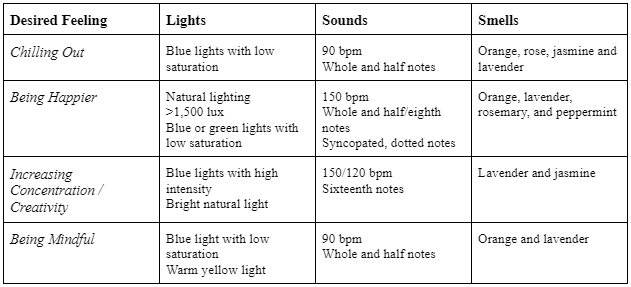
The idea of the TheraPod was developed based on these findings. The goal was to design a space with a comfortable seating area, screen, speakers, aromas and lights to incorporate visuals, aromatics, and sounds to provide the desired user experience. Users could choose their desired end state: relaxing, boosting their mood, increasing concentration and creativity, or meditating and being more mindful.
Once our ideas were finalized, I CAD modeled and presented two design options, as we had discussed in one of our biweekly meetings with our client. The first was a booth-like structure, fully enclosed and private, while the other was a reclining chair with a personal screen to provide privacy.


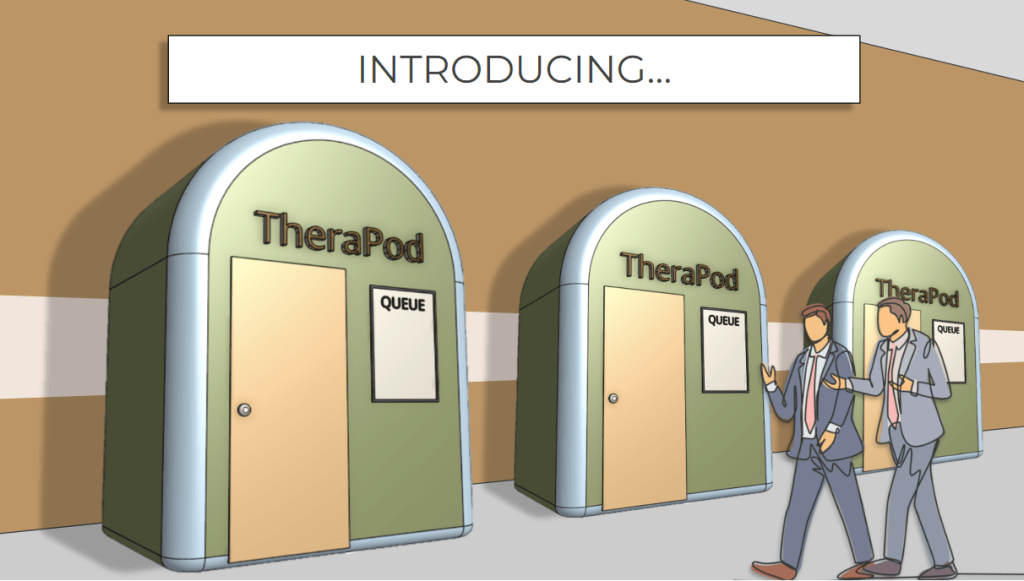
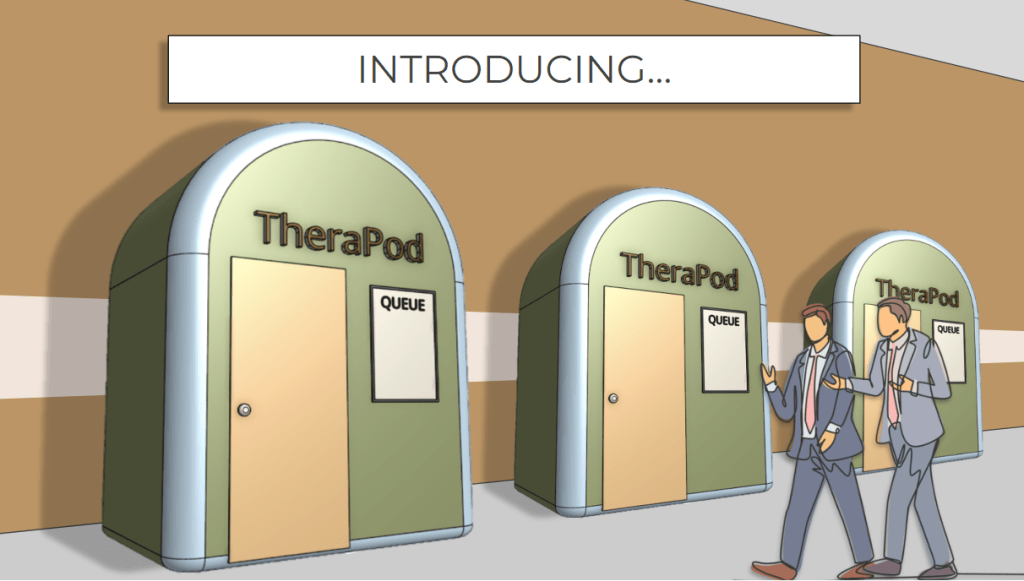
The team and client ultimately decided on the booth-style design and proceeded to incorporate all the desired sensory elements into the layout. I modified the model to include final design changes. The following is the sample advertisement I created for the TheraPod and the final CAD model of it.


We also created a mock-up of what the app interface may look like when the user selects which mode and stimulants they wish to experience. This was created using Figma.
User testing was completed and analyzed in the final report. The final presentation and report can be found below.

Pictured above: my amazing team!
 Michelle Kim